Monday, February 24, 2014

Reflection on "Down on the Island" by Jim Cooper


February. 23. 2014


Chapter Seven: Teaching English : 

       
       The purpose of languages is communication, but languages also have a great power to serve as markers of group identity. The Spanish language, of course, has more than an emblematic importance in Puerto Rico. It also serves as a demonstrative point for Puerto Rican identity, direct opposition to the English-speaking United States of America.

        As I said, Puerto Rico has two official languages: Spanish and English. But Spanish is without a doubt the main language spoken in Puerto Rico, as most of the people in the Island are not adept in English. Language has been a crucial issue in Puerto Rican education and culture since United States Army invaded Puerto Rico. However, “ In 1948 Spanish was made the medium of instructions for non- language subjects at all levels of the public school system in Puerto Rico; English became a special subject to be taught in all grades” (Epstein pg. 133). Till 1948 the public school language program had been a center of argument. In addition, were those who felt adherence with the objective of having Puerto Rico become a permanent part of the Union, the way to make the people “American” was to make them learn the language. 
   
        Still, every school in Puerto Rico teach students both languages Spanish and English, but they focus more on Spanish and teach them English as the second language. On the other hand, in 1991 the Puerto Rican legislature, succeeding the lead of the pro-commonwealth Popular Democratic Party and the governor, Rafael Hernández Colón, legalized a bill that made Spanish the island’s official and primary language. However, in 1993 the pro- statehood governor, Pedro Rossello, certified legislation reestablish equal status to Spanish and English. 
    
       
      During the 1950‘s a professor from the Minneapolis called Jim Cooper traveled from US to teach English at the University of Puerto Rico, Mayagüez Campus . At the UPR-Mayagüez he taught English for various years. In his book “Down on the Island” he talked about his experience during his years teaching on the Island. He confronted various dilemma with students. Most of the students he taught could barely speak or write English. 

      According to Cooper, I think that it is a fact that public schools in Puerto Rico have mismanaged related to English teaching. In Puerto Rico is taking classes throughout the student life, being poor and inefficient for many. I consider that Puerto Rico should develop a system for teaching the English language much more vigorous and efficient, compared to the present. It would be extremely competent for the development as a country.


1. http://muniz-arguelles.com/resources/The+status+of+languages+in+Puerto+Rico.pdf

2. http://internationalliving.com/fund-your-life/teaching-english/


3. https://www.pinterest.com/explore/german-quotes/

Monday, February 17, 2014

"Small Place": Jamaica Kincaid


Monday. February 17. 2014


“A Small Place”: Jamaica Kincaid

        “Antigua is a small island that was settled by Christopher Columbus in 1493. Not too long after, it was settled by human rubbish from Europe, who used enslaved but noble and exalted human beings from Africa” (A Small Place 80-81). Antigua became self-governing in 1967, but did not achieve the status of an independent nation within the Commonwealth until 1981. Born on the island of Antigua, Jamaica Kincaid has become one of the most influential and important authors of post colonial writing today. In " A Small Place", Kincaid attempted in this work reflect or articulate the own identity, the identity of a native of the island of Antigua, demanding an authentic past to replace the unavoidable oppression imposed and suffered from the arrival of the English settlers. Kincaid begins the story by describing what the reader might see and think as a visitor to Antigua. Kincaid in the story criticizes the way that people are acting in Antigua. Her attitude towards the visiting Princess Margaret is reminiscent of the child in the story of the Emperor’s New Clothes. As an adult, the same criteria which Kincaid saw through the pomp of the royal visit is turned on the island at large. In describing the violence of colonial conquest, Kincaid emphasizes a fundamental loss of security and belonging, using the word “orphan” to describe the colonial situation. She speaks bitterly of the corruption of the government and the passivity of the people, but the main force of her anger is directed toward the English who colonized Antigua. She describes herself as so angry about England’s crimes that she cannot support to hear England praised. Also her anger toward tourists is slightly less intense and is focused on the ignorance required of people to enjoy themselves in a desperately poor place. She is astonished that more Antiguans don’t share her outrage and is frustrated by their apparent acceptance of their status. As the resentment of the adult, Kincaid reveals that she remains deeply attached to her home and to her people. However, where I, as a reader, slipped easily into the role of tourist at the beginning of the story. I quickly felt uncomfortable, guilty, even for something that I had neither prior knowledge. 
Throughout "A Small Place", especially in the final section, Kincaid makes an illustration of Antigua’s natural beauty. She describes the intense colors of the nature, the sunlight, and the sea. The idea of unreality, that she mentions, is part of what she sees as the effect of the island’s beauty on those who live or travel there. Kincaid ‘s work, A Small Place, evidence the search of Caribbean identity, amid the need to overcome past traumas, resisting the imposition of a culture, language and customs by settlers, seeking its individuality through language, and also promoting reconciliation of each other’s existence on equal terms. Through “A Small Place”, Kincaid writes a history of truth and understanding. She wishes to break all cultural boundaries of racism and colonialism, in order to make of Antigua an autonomous place. 

References: 
- http://www.neiu.edu/~circill/lopez/mcs225/weekxismall.pdf
-http://www.postcolonialweb.org/caribbean/kincaid/bongiorni2.html
- books.google.com.pr/books?isbn=1592134130
- books.google.com.pr/books?isbn=0520230213
- http://www.sparknotes.com/lit/smallplace/summary.html

Tuesday, January 28, 2014

My Best Journey: Spain


Tuesday. January 28. 2014

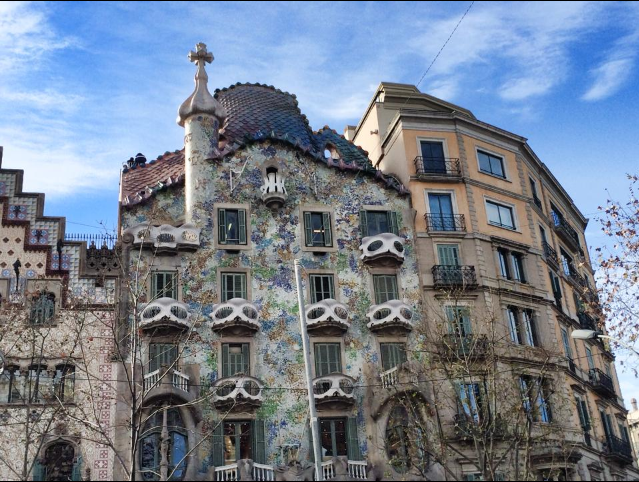
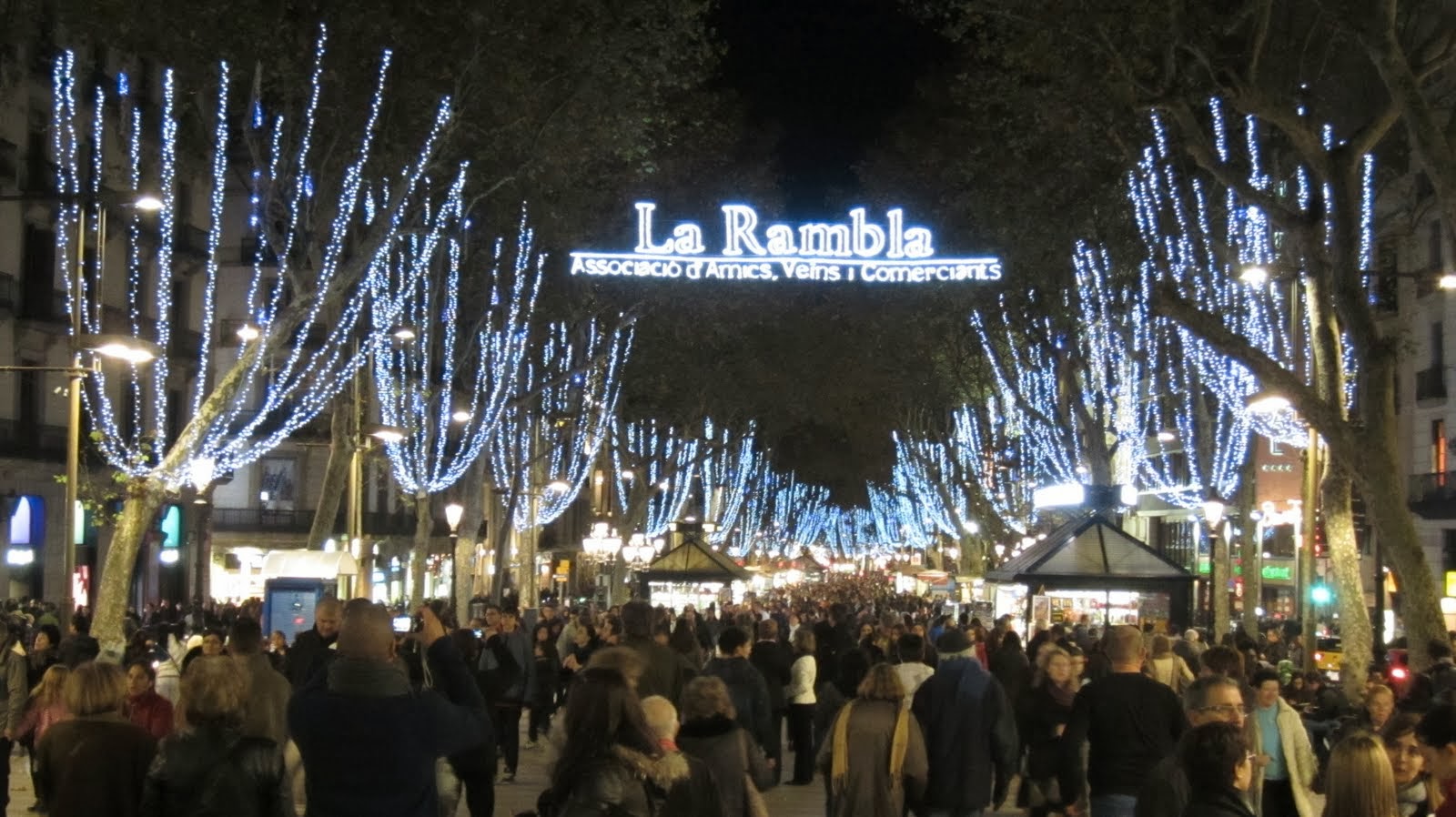
          On December 26, 2013 I toured Spain with Ana, Adriana and my twin sister. I have to confess that it was my first trip to Spain. When we arrived to the capital of Spain, Madrid, we were amazed by the beauty and architecture. The unique problem that we had was  that it was very cold, and we were freezing our butts off. One of the first things that we did when we got to Madrid was to take a taxi to the hotel, Me By Melia. The next day, we visited Cervantes’s house, where there is a statue of Cervantes that was erected in the Plaza de Las Cortes in Madrid. Outdoor cafes are very prominent in Madrid and we made use of them often. In Madrid was the first time I learned about Tapas at one of the restaurants that I visited. If you do not know what Tapas are, they are simply a wide varierty of appetizers or snacks in Spanish cuisine. They are served either cold or hot and can be combined to make a full meal. Of course, we visited the Prado Museum in Madrid, which is renowned as the largest art gallery in the world. At the museum I was able to appreciated some of the world’s most famous artwork, including Spanish artists  such as Velazquez, El Greco, Dali, Goya, Raphael, and Bosch. We were also able to travel back in history to numerous places of significances, including the Palacio Real in Madrid, Toledo’s ancient cities, the house-museum of El Greco and the Sagrada Familia church, which has been being worked on since 1883, begun by Gaudi. Walking through the streets we were entertained with many street entertainers who dressed up as statues. The last day of our trip we had the opportunity to watch some Flamenco dancing which was extremely amazing and dramatic compared to the dance shows I’ve seen in Puerto Rico. Our last day in Madrid we decided to visited a nightclub which is named Kapital. The next day we took plane to Barcelona, there we stay in a small hotel. Without  a doubt, I can say that Barcelona has been so far my favorite city that I have ever visited in my whole life. I remember that one of my favorite places in Barcelona was the famous boulevard, Las Ramblas. There, you have the chance to visit and shop many souveniers that you wanted, or also  you could delight with mime performances and take a picture with them. I can sincerely say that Las Ramblas was my favoritre spot in all Spain. Finally my friends and I stayed in Spain for a total of two weeks. This trip to Spain was amazing and full of enjoyment and education. Watching the people and their culture was one of the best parts of being in Spain. Nevertheless, it was my favorite travel experiences that I had made in my whole life.


My Wonderful Places:


Tuesday. January. 28. 2014

10 places I've traveled:

1. Madrid, Spain

2. Orlando, Florida

3. Punta Cana, Dominican Republic

4. Vieques, Puerto Rico

5.  Barcelona, Spain

6. St. Thomas, U.S. Virgin Islands

7. Tortola, British Virgin Islands

8. Virgin Gorda, British Virgin Islands

9.  Culebra, Puerto Rico

10. Fajardo, Puerto Rico


Who Am I?

                       
 Tuesday. January 28. 2014

        My name is Andrea P. Cortes Nazario. I am 19 years old and my nationality is Puerto Rican. I come from a very big family, which include six people. I have two brothers and a twin sister aged 21,19,18. I am now studying Mathematics at the University of Puerto Rico, Rio Piedras Campus. I get most of my physical traits from my mother. I am small in height, I have green eyes like her. I am the kind of person who values honesty, commitment, responsibility and kindness. My passion are sports, especially soccer, I play the violin, paint, draw, listen to music read and dance. I extremely love to watch comedy, series, horror films, and movies. I am a very simple person who enjoys the simple things in life. I always love to fool around, making jokes and laugh because I like seeing, not only myself, but also others, happy. One thing that I have to admit is that the reason that I do not usually ride roller coaster is because I am afraid of the heights. Also when I am busy focusing on my works I 'm serious about it, and I don't want to be disturbed because I easily get annoyed. I love to cook for my family. I am not an expert comforting and giving advice to other people, but I show my comfort and care by hugging them. I like to travel and explore the beauty and cultures of countries. However, I have many friends and supporting family, who are always there to cheer me up. My dream is to graduated from University and be a professional doctor. At my 19 years of age I have lived so many experiences that have made me the person that I am today.